

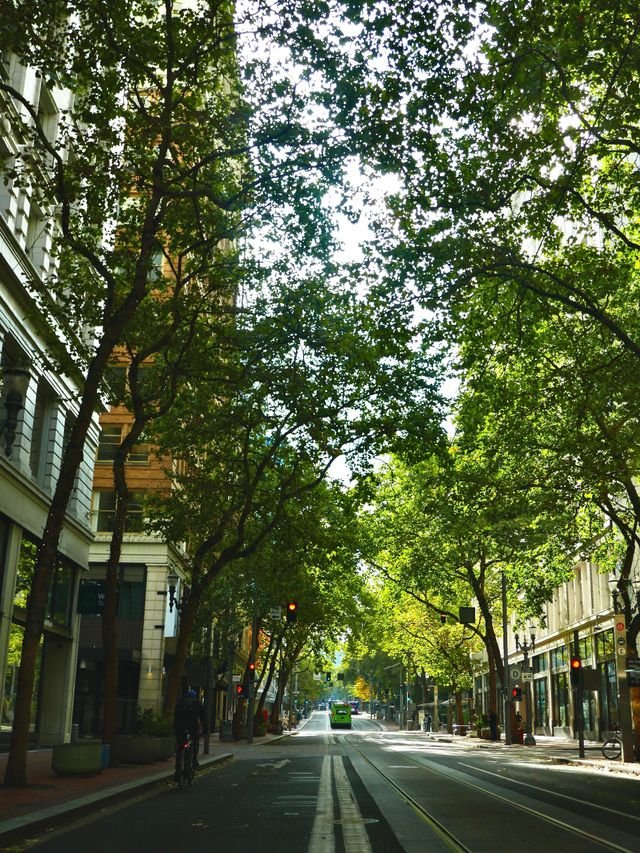
Photo by utsukushii 1226 on pexels
Think about the last time you walked through Portland on a hot summer day.
Pavement radiating heat. Sunlight bouncing off buildings and sidewalks. Then you step beneath a dense canopy of trees, and something changes.
The light softens. The temperature drops. The air feels different, crisp, and cool.
That relief isn't just in your imagination.
Trees cool their surroundings by providing shade and releasing water vapor through their leaves, a process known as transpiration. Together, these natural cooling mechanisms help reduce temperatures in urban environments. Research consistently shows that healthy urban forests improve air quality, reduce heat, support wildlife, and make cities more livable (Alonzo et al., 2025).
But there's a catch. The trees helping us cope with hotter summers have to survive those hotter summers, too.
99 Problems, and They’re All Water
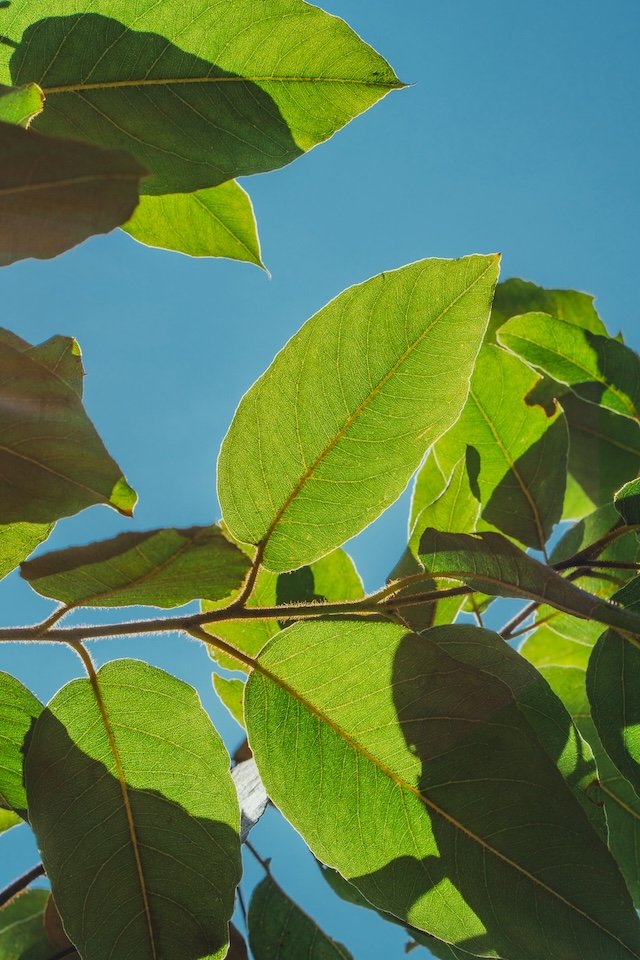
Photo by Soliman Cifuentes on Unsplash
On hot days, trees face a balancing act. Tiny pores on their leaves, called stomata, open to take in carbon dioxide for photosynthesis. At the same time, water escapes through those openings as part of transpiration.
When water is plentiful, that system works remarkably well.
During prolonged heat and drought, however, trees begin losing water faster than they can replace it. To conserve moisture, they close their stomata. That helps prevent dehydration, but it also slows photosynthesis, reducing the tree's ability to produce the energy it needs to grow, defend itself, and recover from stress.
If those conditions persist, trees may lose leaves, experience canopy dieback, become more vulnerable to pests and disease, or eventually die.
In other words, the trees that cool our neighborhoods are managing their own heat emergency, while helping us manage ours.
Now Zoom Out, Zoom Out
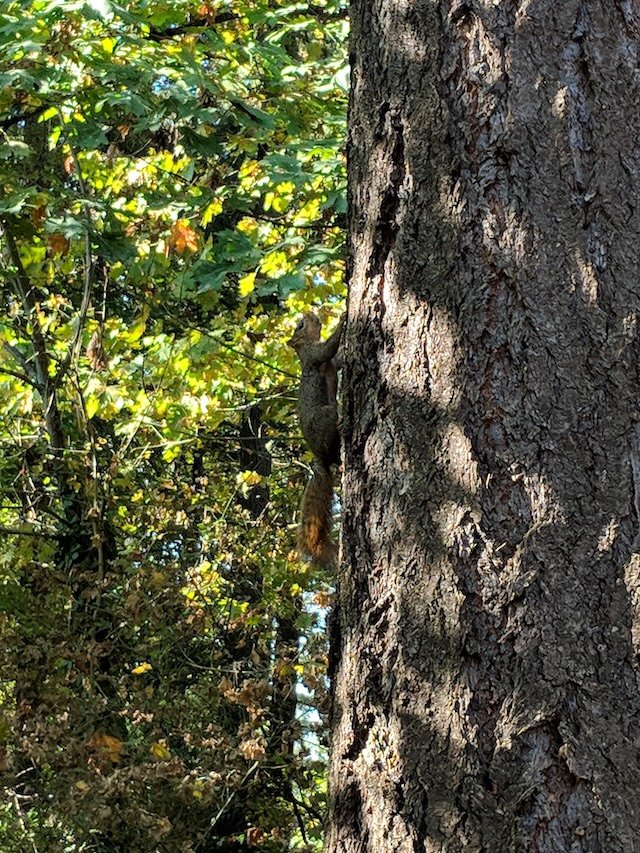
Photo by Rosie DeLibero
A single stressed tree is one organism responding to its environment. Thousands of stressed trees can completely change the environment.
Urban forests are more than collections of trees. They are interconnected ecosystems that support birds, pollinators, mammals, fungi, insects, and countless other forms of life while helping regulate temperature, stormwater, and air quality (Cocroft et al., 2023).
When tree canopies thin, more sunlight reaches streets, sidewalks, and buildings. Less shade means more heat. Habitat changes, too.
For wildlife, trees provide shelter, nesting sites, food, and safe corridors through the city. As trees decline, those resources decline with them (City of Portland, 2025a).
We Built This City on Roots and Soil
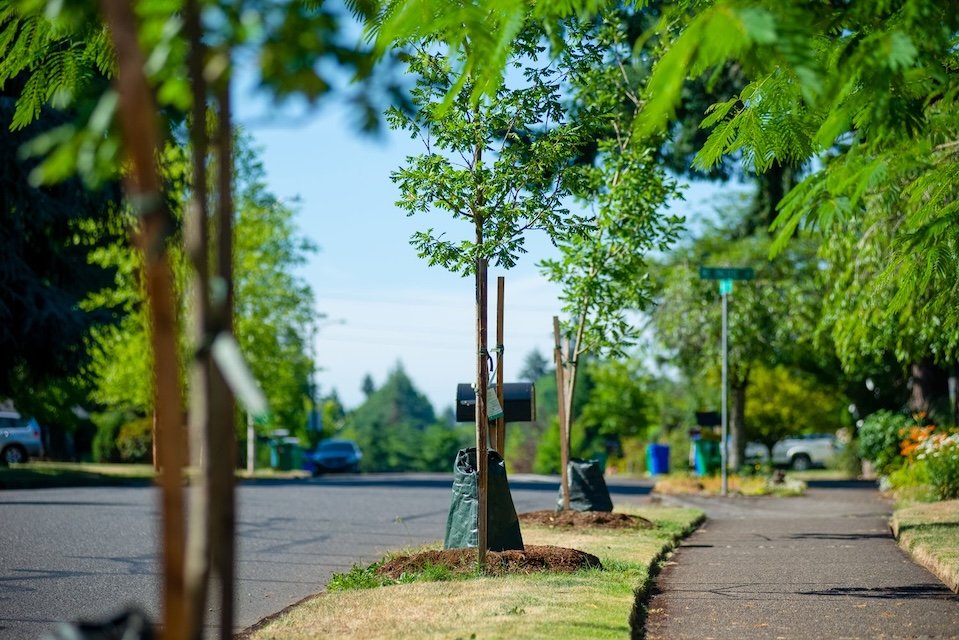
Photo by portland.gov
Humans are part of this ecosystem.
Trees shade homes and sidewalks, reduce urban heat, improve air quality, intercept stormwater, store carbon, and create spaces where people can gather, exercise, and reconnect with nature. During extreme heat, healthy tree canopies become critical pieces of public infrastructure (City of Portland, 2026a).
But not every Portlander experiences those benefits equally.
Portland's latest canopy assessment found that trees cover approximately 32.4% of the city's land area. West of the Willamette River, canopy coverage is about 56%. East of the river, it's only about 22%. Recognizing these disparities, the City of Portland now prioritizes tree planting and care in neighborhoods with less canopy and greater vulnerability to extreme heat, with a long-term goal of increasing citywide canopy coverage to 45% (City of Portland, 2026b; City of Portland, 2025b).
Next Time You Stand Under a Canopy, -opy, -opy
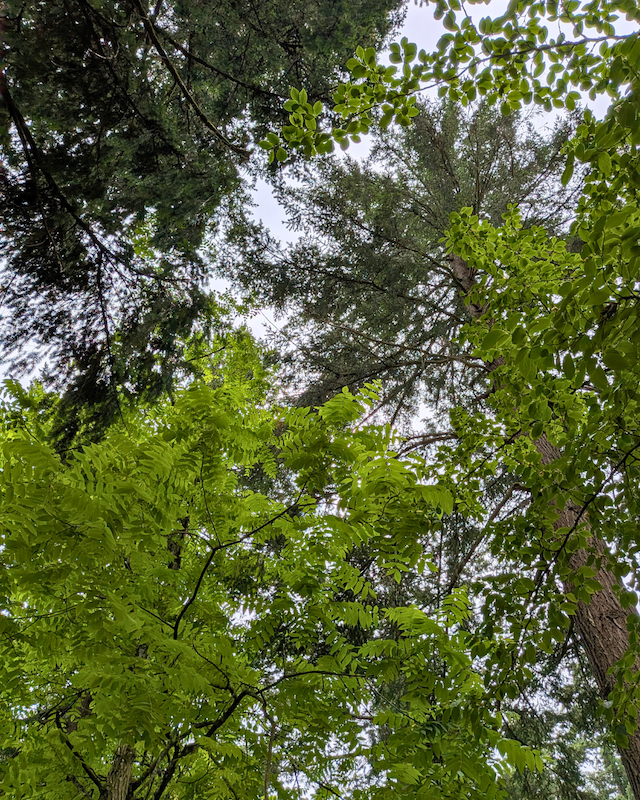
Photo by Rosie DeLibero
On our Walk & Talks, we spend a lot of time beneath Portland's urban canopy.
The next time you're with us (or exploring on your own) pay attention when you move from an exposed sidewalk into the shade of a dense stand of trees.
Notice the temperature. The light. The sounds.
Look for birds overhead, insects among the leaves, fungi on fallen logs, and all the other life sharing that space.
Then look up.
The canopy above you isn't simply the backdrop to the ecosystem. It's helping create it.
And as our summers continue to change, understanding that relationship becomes increasingly important.
Because when an urban tree is stressed, the effects don't stop at the tree.
About the Author
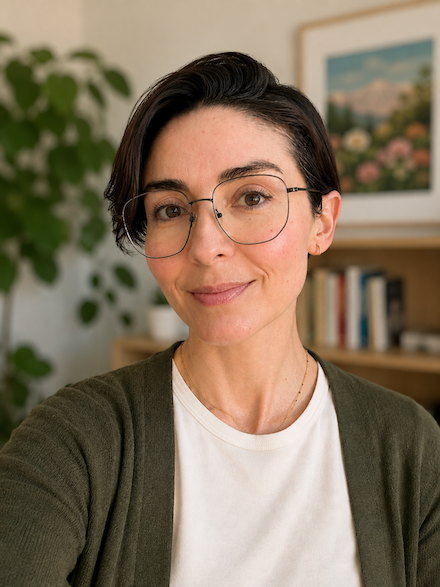
Rosie DeLibero, MPS, is a science communicator, researcher, and lifelong naturalist who believes the best science is the kind that helps us see the world a little differently. As Communications Chair for Women in Science PDX, she develops science communication initiatives, editorial content, and community programs that connect people with STEM through curiosity, conversation, and shared experiences. Her work spans animal behavior, ecology, nonprofit leadership, and strategic communications, with a particular interest in helping people discover the science happening all around them.
Sources
Alonzo, M., Ibsen, P. C., & Locke, D. H. (2025). Urban Trees and Cooling: A Review of the Recent Literature (2018–2024). Arboriculture & Urban Forestry, 51(5), 420–444. https://doi.org/10.48044/jauf.2025.023
City of Portland. (2025a). Urban Forestry Priority Service Areas. https://www.portland.gov/trees/priority-service-areas
City of Portland. (2025b). Equitable Tree Canopy Program. https://www.portland.gov/bps/cleanenergy/tree-canopy-workgroup/about-equitable-tree-canopy-program
City of Portland. (2026a). 2026 Tree Code Update. https://www.portland.gov/trees/title-11/2026treecodeupdate
City of Portland. (2026b). Portland Tree Canopy Cover Update. https://www.portland.gov/trees/news/2026/7/21/portland-tree-canopy-cover-update
Cocroft, A., Lerman, S. B., Klein, P. N., & Rodbell, P. (2023). Urban forests as habitat for people and wildlife. CityTREES, 24–27. https://www.fs.usda.gov/nrs/pubs/jrnl/2023/nrs_2023_cocroft_001.pdf