

When I first became involved in science, it felt as though my life was destined to follow a straight, predictable path. A bachelor’s degree, followed by a master’s, a PhD, a postdoc, and - eventually - a professorship. Yet, years later, I suddenly realized: I could no longer stay in academia.
What if one day you decide to drop out of your PhD program? Maybe you consider moving into an entirely different industry. Or, while still working on your master’s, you realize that an academic research career simply isn't feasible for you. You need a different way to contribute to science, a path outside of academia. Well, I have an option.
What is SciComm?
Science communication, or SciComm, involves sharing scientific knowledge. Too vague? Let’s make it a bit clearer: a science communicator helps people exchange scientific ideas and methods, from person to person, organization to organization, and industry to industry. Discussing someone’s poster at a conference counts as science communication. Talking about breakthroughs in your field is science communication. Creating a visually engaging presentation to explain your own experiment is also science communication. Often, science communication opens up a dialogue between a communicator and their audience.
Communication can be internal, taking place within the scientific community itself, such as at a conference. Or it can be external, for instance, when an institute representative shares its scientists’ achievements with the public.
Communication also depends on the audience: scientists, businesses, government, or the general public. While science communication shares much with public relations (PR) and marketing, their main purposes can differ. Marketing often promotes a product or technology, while PR often focuses on a scientist's or institution's reputation. SciComm focuses on sharing scientific knowledge and helping people understand it. It can also have other goals, such as raising awareness of vaccine research or building local interest in science.
Science communication takes many forms. Examples include:
written content: books, science journalism, social media, etc.
visual communication: infographics, illustrations, graphical abstracts, comics, etc.
video content
podcasts and radio
lectures and presentations
museum exhibitions and interactive events (science days, festivals, science cafés, etc.)
games and gamification

See the full version of the infographic here. Published by National Geographic in 2015. Designed by Fernando Baptista.
Forms of Science Communication
Science Writing
One of the longest-established areas of science communication is science writing and science journalism. Science journalists write for the general public, drawing attention to intriguing ideas or events in science, reporting on investigations, and revealing uncomfortable truths. Often, science journalists are scientists who possess a solid understanding of how science works from the inside. Combining an engaging writing style with the ability to unravel mysteries and craft compelling narratives, they introduce readers to a wide range of topics, from scientific fraud and elephant behavior to CRISPR. Scientific articles are also a form of communication. You can read about what storytelling entails in scientific research and publishing in my article here.
Naturally, this category also includes books. Popular science books often become bestsellers, spreading ideas to millions. Consider Rachel Carson's Silent Spring, which addresses the consequences of environmental pollution caused by toxic chemicals. Or Carl Sagan's books, which sparked an interest in space among thousands of children.
Visual Communication
A single image can sometimes convey more than a thousand words! This category also encompasses graphical abstracts, which often precede articles in scientific journals, as well as posters and illustrations, some of which strike a delicate balance between science and art.
Every illustration and poster should have a core idea, a key takeaway. The fewer words in the illustration, the better. If you are interested in scientific visualization, look for Science’s favorite news visuals of 2025 or check the list on The Most Beautiful Scientific Illustrations in History.
Video Content
Video communication combines text and visuals. Beyond high-quality imagery and editing, a well-crafted script is essential. A prime example is the Veritasium channel, which skillfully blends superb presentation, a meticulously thought-out script, and elements of investigative journalism. But there are many other examples, including the wonderful Clockwork show, which is animated and demonstrates biochemical wonders.
Podcasts and radio
Podcasts are popular because, unlike lectures or video formats, they create a sense of dialogue between the host and listeners, even if no actual conversation is taking place. Podcasts have a more relaxed feel. Long before podcasts arrived, radio was popular before the widespread use of television and the internet. Now you can listen to StarTalk with Neil deGrasse Tyson, or The Infinite Monkey Cage on the BBC.
Lectures and Presentations
While lectures and presentations often feature a visual component, success doesn't hinge on visuals alone. What matters most is what the lecturer says, and, very often, how they say it. You may have seen Sapolsky’s brilliant lecture series on the biology of human behavior. The impact of his lectures relies almost entirely on narrative and his storytelling ability, and he rarely uses other methods (presentations or visual materials).
Museums, Exhibitions, and More
You might have visited a science museum or exhibition. This format relies heavily on interactivity: visitors move through the exhibits, read and gather information, and often participate in experiments themselves. While this approach is particularly beneficial for children, adults can conjure a mini-tornado or see how much they would weigh on different planets.
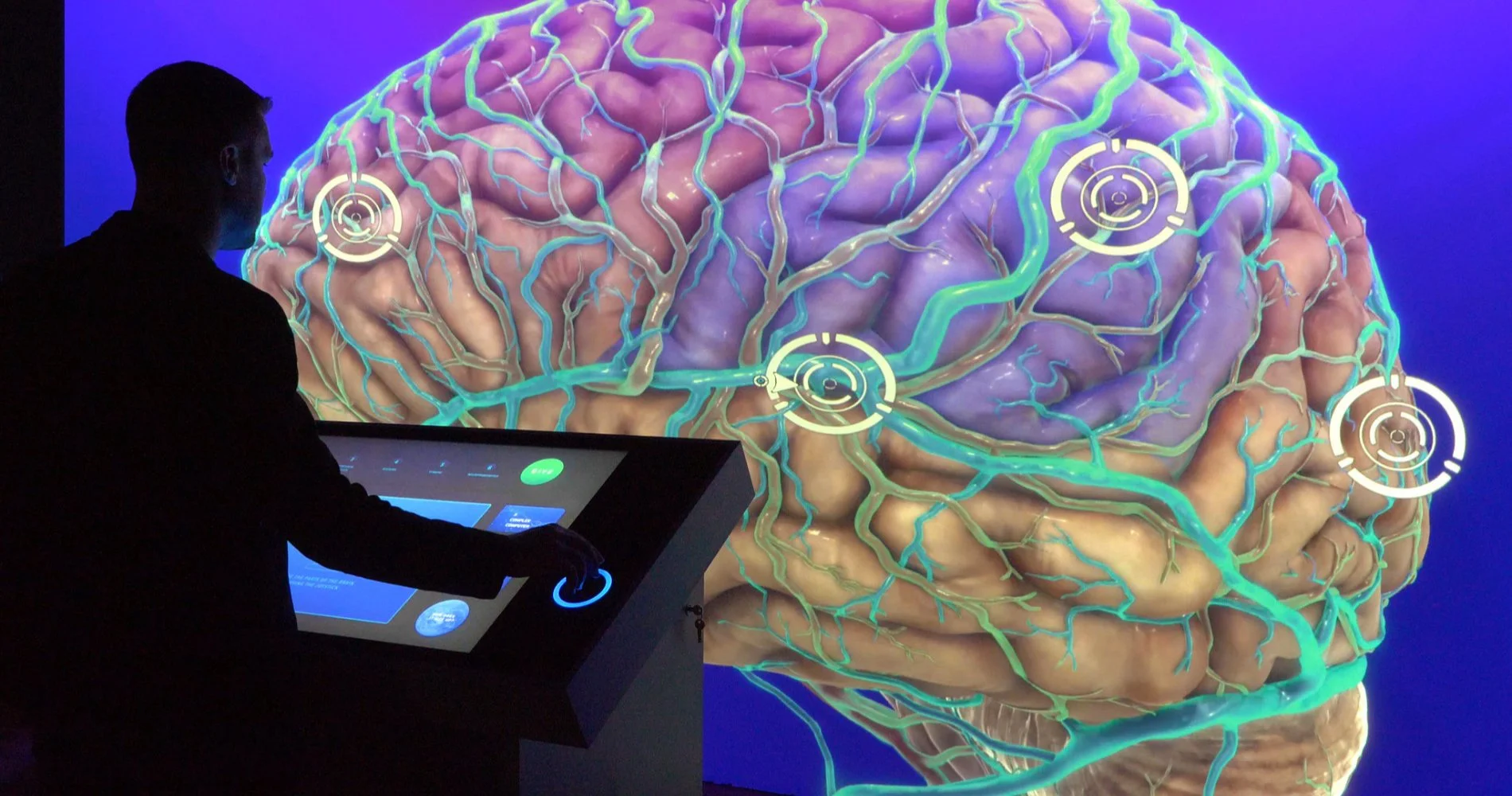
Brain Odyssey Interactive Exhibit, Jim Spadaccini, 2020
Games and Gamification
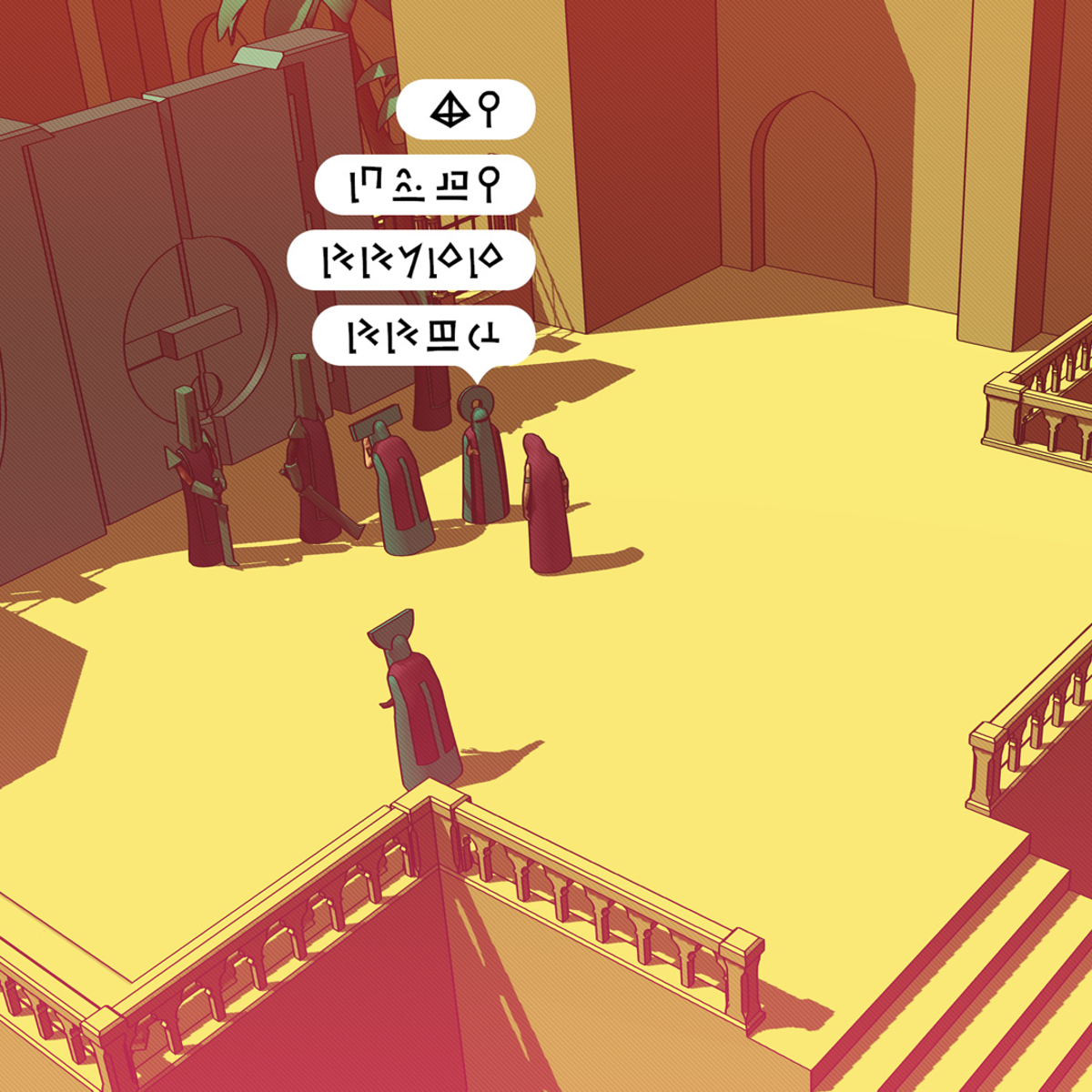
The first science-themed game was Bioscopial (2001), which let players immerse themselves in biology and physiology. It is a first-person adventure game in which nearly all the puzzles hinge on understanding science. Now there are Plague Inc., richly detailed historical games, and even linguistics-based games, such as Chants of Sennaar. There are also scientific games intended to train scientists and even physicians: a 2007 study showed that proficiency in the video game was directly proportional to the subjects' professional skills.

About the Author:
Zoe Chernova is a science journalist and communicator with a background in biochemistry. She studied reactive oxygen species and, after leaving academia, began writing about modern science, unusual phenomena, and women scientists. She is especially interested in animal culture and runs a popular science newsletter, Look What I Found in Science.